
Cours en ligne
THE PATH TO AWAKENING
| Ce document ne peut être vendu ou cédé à des tiers, ni reproduit sur quelque support que ce soit, même partiellement, sans autorisation écrite de l’auteur. En aucun cas la responsabilité de l’auteur ne saurait être engagée, la mise en œuvre de ce contenu restant sous l'entière responsabilité du lecteur. L'ensemble de ce contenu reste une pratique de bien-être et de prévention, n'ayant aucune vocation médicale. |
One Step Towards Prayer
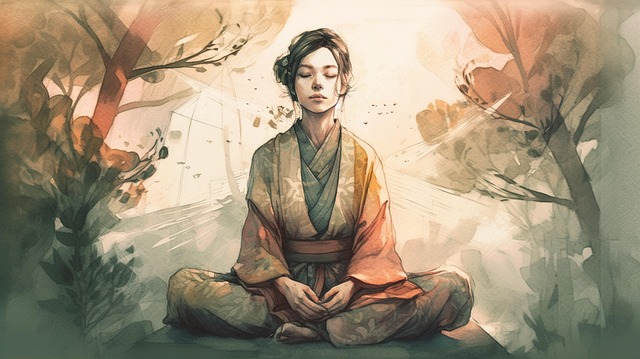 In life, everyone faces challenges, and it’s only natural to seek support to overcome them.
Faith, prayer, and devotion can provide a valuable inner strength, without the need to follow any particular religion.
Every year, thousands of people witness miracles, proving that faith can truly move mountains.
It would be a shame to deny ourselves these powerful tools simply because a certain religion or form of spirituality makes us uncomfortable.
For those who feel drawn to this path, it is possible to call upon certain deities or spiritual figures according to one’s needs or the situations encountered.
And of course, depending on individual traditions and beliefs, other beings of light or divine figures can also be invoked.
Here are a few examples.
Compassion, Love, Guidance Toward Awakening:
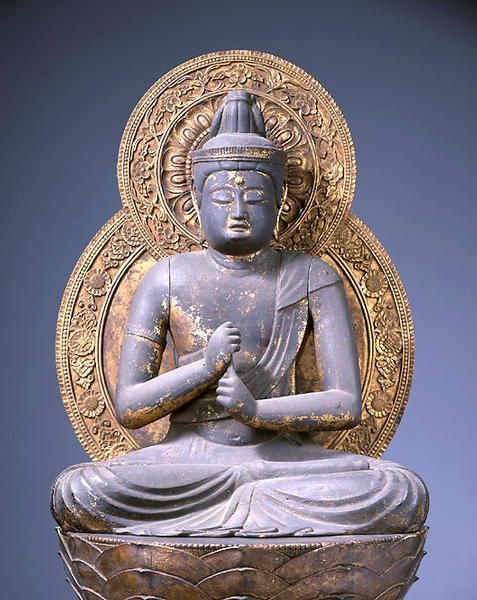 Dainichi Nyorai is the central cosmic Buddha of Japanese esoteric Buddhism. He corresponds to the Buddha Mahavairocana, whose name means “Great Light.”
Unlike Siddhartha Gautama, Dainichi Nyorai does not represent a human figure who lived on Earth, but the ultimate reality and universal wisdom that pervade the entire universe.
He is regarded as the source of all Buddhas and the embodiment of the awakened nature present in every being.
Here is the mantra used to invoke Dainichi Nyorai (to be recited 108 times):
Om gate ! Gate ! Paragate ! Parasamgate ! Bhodi svaha
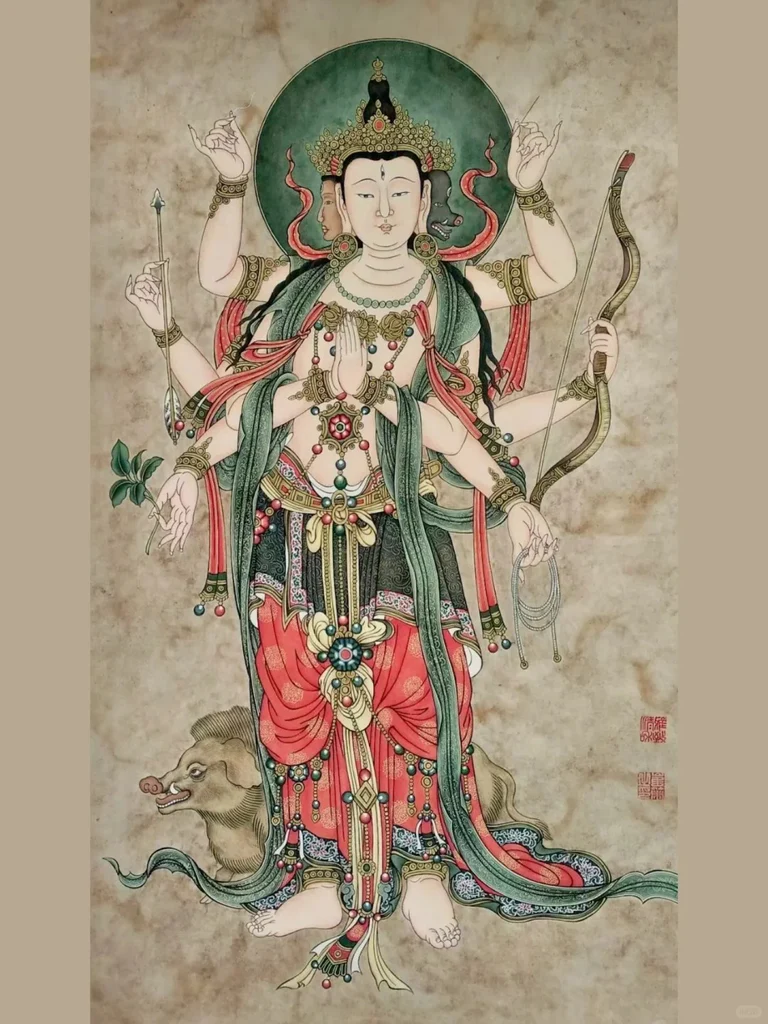 Marici, known in Japan as Dai Marichi Ten, is a deity of esoteric Buddhism who embodies subtle light, illusion, and invisible protection.
Her Sanskrit name means “ray of light” or “mirage,” evoking a presence that is at once real and elusive.
Spiritually, she symbolizes the awakened mind’s ability to navigate the illusions of the world without attachment, while protecting the practitioner from both internal and external obstacles.
In tradition, she is regarded as a protective force that quietly guides the practitioner, enabling them to progress on the spiritual path with clarity, courage, and discernment.
Mary, the mother of Jesus Christ in the Christian tradition, is venerated as a symbol of purity, compassion, and intercession.
Spiritually, Mary represents a maternal and protective presence in the world, guiding people toward trust, prayer, and mercy.
She is often invoked for support and comfort, as well as to cultivate the virtues of compassion and steadfastness in faith.

Jesus Christ is also a central figure in Christianity, but he can also be seen as a universal spiritual guide.
He embodies compassion, forgiveness, and unconditional love, showing through his life and teachings how to live with integrity and kindness toward others.
His words and actions inspire us to transform suffering, develop patience and understanding, and cultivate empathy in our relationships.
Through his example of sacrifice and service, Jesus teaches the importance of generosity, moral courage, and perseverance in the face of life’s challenges.
His deeds and teachings continue to nourish reflection on the path toward an ethical and mindful life, accessible to all regardless of religious belief.
Health, Healing :
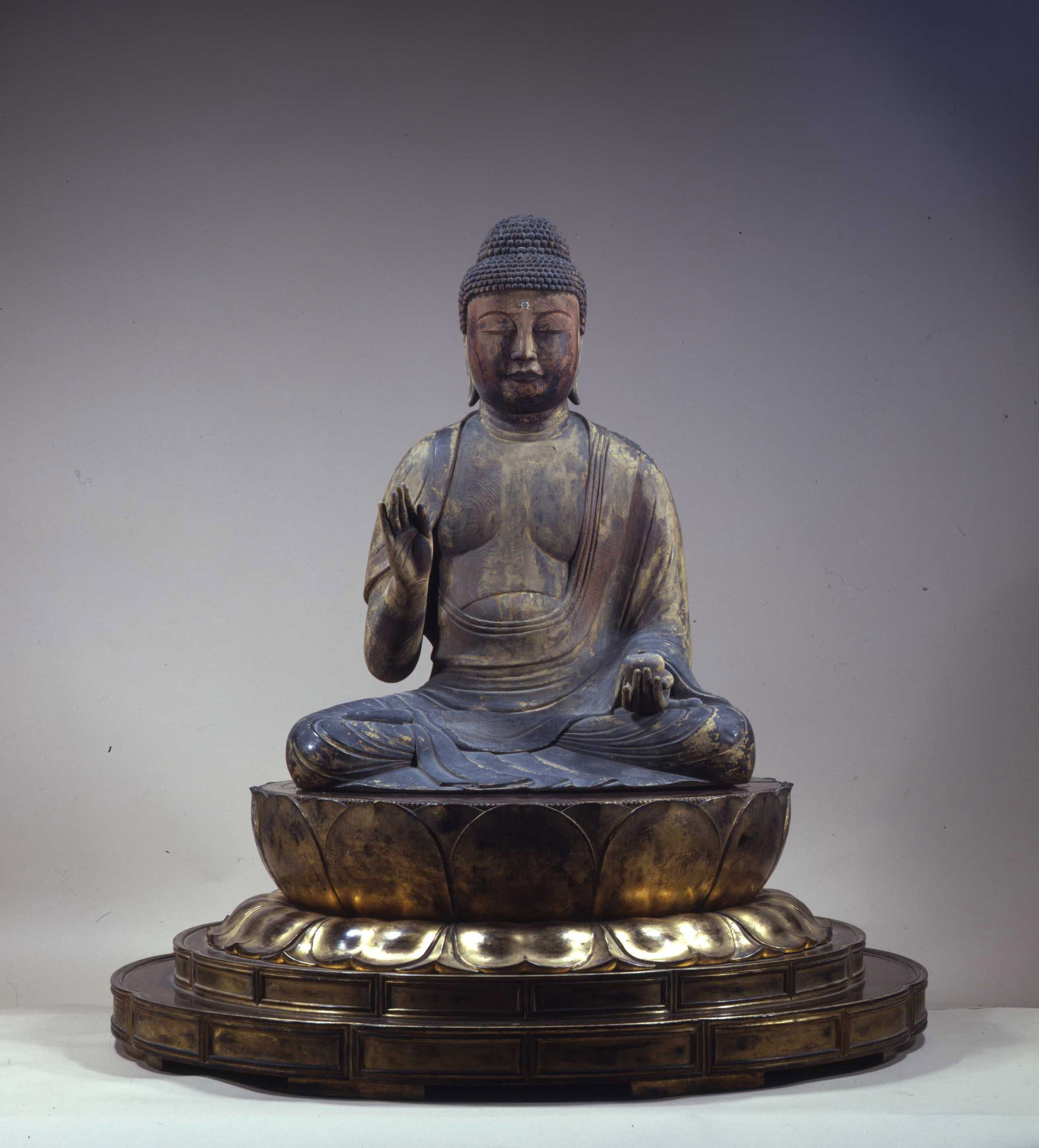 Bhaisajyaguru, known in Japan as Yakushi Nyorai, is the Buddha of healing and benevolent light.
More than a healer of physical bodies, he symbolizes the complete healing of the mind and of karma.
His blue light, which radiates from his presence, represents clarity, purification, and the wisdom that dispels inner obscurations.
On a spiritual level, Yakushi Nyorai guides practitioners in transforming suffering into awakening, developing compassion, and creating the conditions conducive to health and serenity.
In Japanese Buddhism, he is invoked to protect and strengthen not only the body, but also the heart and the mind, allowing practitioners to progress on the path to awakening with confidence and balance.
Here is the mantra used to invoke Yakushi Nyorai (to be recited 108 times):
Om korokoro sendari matōgi sowaka
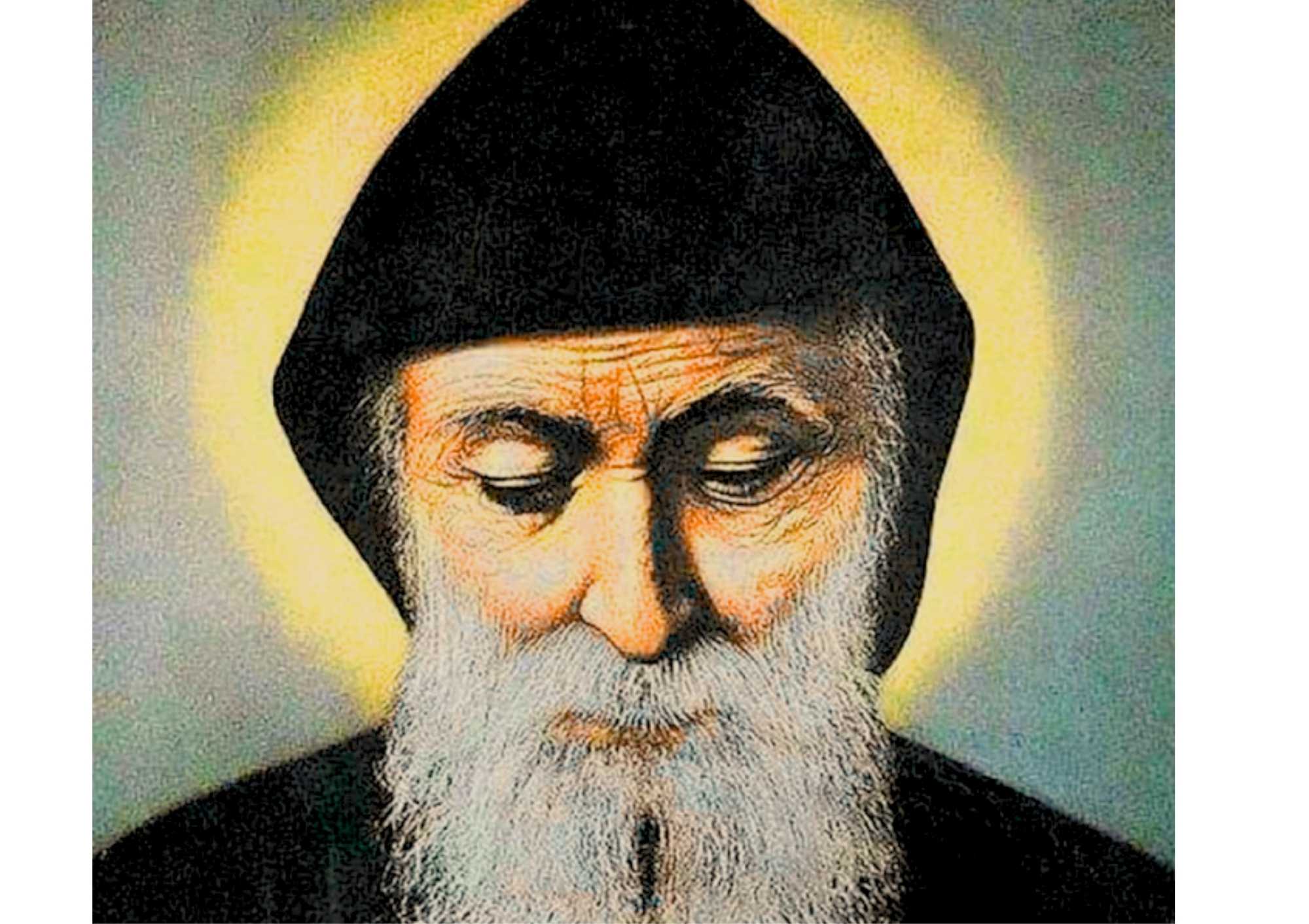 Saint Charbel Makhlouf (1828–1898), a monk from Lebanon, is venerated for his life of deep meditation and prayer, but above all for the miracles of healing attributed to him after his death (more than 30,000 to date).
Many testimonies recount that the sick have been relieved of chronic pain, serious illnesses, or conditions considered incurable after praying or placing objects associated with Saint Charbel on their bodies.
These healings, often rapid and unexpected, have made him a spiritual figure symbolizing the power of faith, silent presence, and compassionate attention.
His example inspires people to believe in the power of inner focus, perseverance, and compassion, showing that peace and devotion can become a tangible means of transformation and support for others.
Abundance, Material Protection:
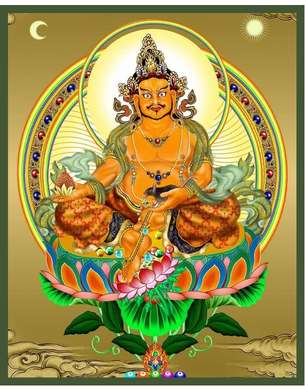 Jambhala is a deity venerated in Tibetan Buddhism as a source of prosperity, protection, and spiritual abundance.
More than a mere bestower of material wealth, Jambhala embodies the liberation of the mind from fear and scarcity, enabling practitioners to cultivate generosity, confidence, and inner balance.
His practice aims to transform attachment and greed into wisdom and compassion, encouraging the ethical and altruistic use of resources.
Jambhala is invoked to overcome obstacles related to poverty, stress, or insecurity, while supporting the practitioner’s spiritual path with discernment and abundance.
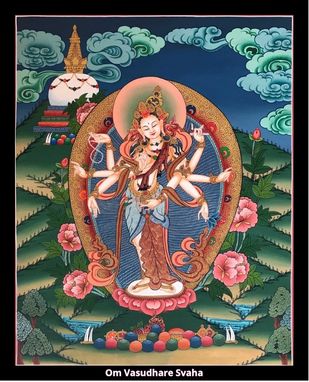 Vasudhara is the goddess of wealth, abundance, and prosperity, venerated primarily in Tibetan Buddhism and in Nepal.
She symbolizes infinite generosity and both spiritual and material fertility, inspiring practitioners to cultivate generosity, gratitude, and altruism.
On a spiritual level, Vasudhara helps remove obstacles to personal and spiritual fulfillment by transforming the fear of lack or insecurity into confidence and inner abundance.
Her practice also encourages the ethical and altruistic use of wealth—whether material or mental—thus contributing to collective prosperity and spiritual growth.
Purifying Karma, Seeking Forgiveness:
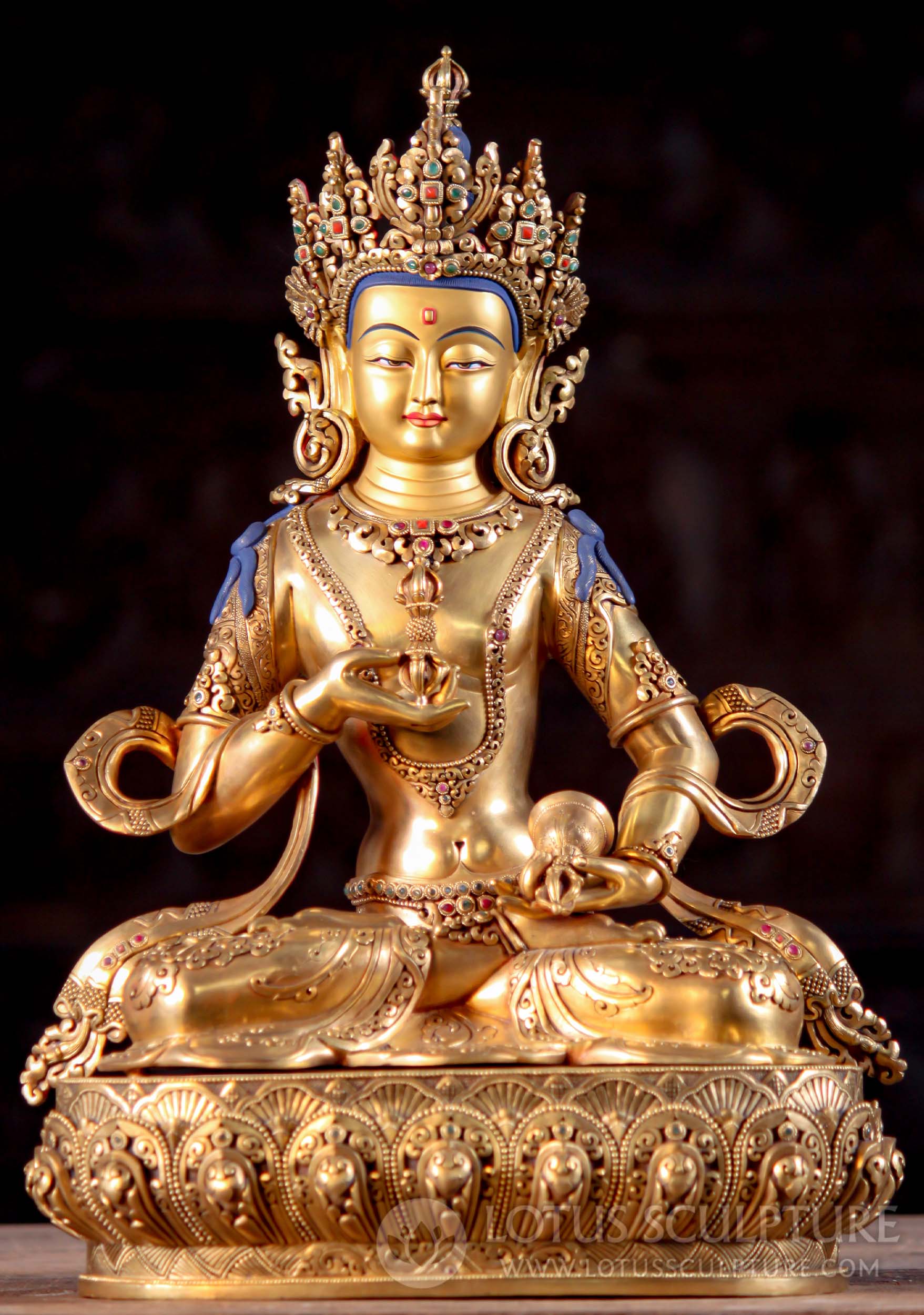 Vajrasattva, whose name literally means “diamond being” (vajra = diamond or thunderbolt, sattva = being), is the deity of complete karmic purification in Vajrayana Buddhism.
His adamantine essence symbolizes the indestructible and immaculate mind, capable of dissolving all mental and karmic impurities accumulated over the course of many lifetimes.
By meditating on Vajrasattva and reciting his mantra, practitioners aim to cleanse past negative actions, remove spiritual obstacles, and clarify the mind, thereby preparing the ground for deep transformation and progress toward awakening.
This purification is not merely symbolic: it helps transform the mental and emotional habits that hinder wisdom and compassion, strengthening a mind that is stable, clear, and indestructible—like a diamond.
Here is the mantra used to invoke Vajrasattva (to be recited 108 times):
Om Vajrasattva Hum