
Cours en ligne
THE PATH TO AWAKENING
| Ce document ne peut être vendu ou cédé à des tiers, ni reproduit sur quelque support que ce soit, même partiellement, sans autorisation écrite de l’auteur. En aucun cas la responsabilité de l’auteur ne saurait être engagée, la mise en œuvre de ce contenu restant sous l'entière responsabilité du lecteur. L'ensemble de ce contenu reste une pratique de bien-être et de prévention, n'ayant aucune vocation médicale. |
Disidentification Process
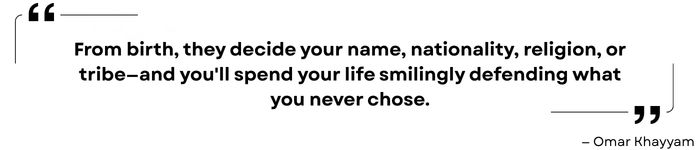
We've realized that soothing the "self" is essential but not enough. We must go further and engage in a disidentification process.
So, what solutions for disidentifying from the "self"?

- The Samatha Path Meditation: This practice instantly shifts the "self" to the background of experience. It's by far the most effective technique—if properly understood. Daily practice already plants the seeds of awakening.
- Insert a concept: When thinking "I'm worthless," reframe to "I have the thought that I'm worthless." This simple addition creates distance. With repetition, it becomes automatic, and the "self" fades away.
- Locate the "self": Ask: "Where is the self?" In our head? Our thoughts? Does it exist stably? No. Questioning its very existence undermines belief in an unquestionable identity.
- Avoid 'I': Replace "I'm angry" with "There is anger." This turns emotional identification into a transient event.
- Pause our story: Imagine losing your memory: no access to recollections, no name, job, family, or social role. What remains?
- Listen more than speak: In social interactions, listen without always sharing your view. This rests the "self" and lets others express themselves without one-upping words or experiences.
- Detach (a bit) from the world: We all have selective empathy. A news story moves us to sadness, rage, disgust—yet tragedies abound everywhere: starving children ignored, homeless overlooked. Realizing experience is universal, not personal, puts incoming info in perspective. It doesn't make us insensitive; it boosts compassion. The "self" becomes "us."
Disidentification takes time. The "self" is tenacious and reluctant to let go. Practice these exercises often to uproot it.
Emptiness of the "Self"
 Caution: When the "self" dominates experience, any disidentification attempt feels like a threat to survival. Take someone identified with the emotional "self": suddenly feeling nothing alarms it, triggering a fight-or-flight response.
This emptiness sensation acts as a powerful alert blocking disidentification. Attempts can spark anxiety, fear, panic, or intense suffering.
Of course, no one dies or goes mad through disidentification. Like any fear, the "self's" loss-of-control feeling lacks substance. Reaching the end requires letting go and habituation.
That's why perseverance is key—and guidance from an experienced, compassionate mentor.
The Identity Shift
 When we successfully disidentify from the "self," it has no choice: it ends up de facto in the background of experience. And its presence is no longer as "useful" as before
From that moment, the continuum of our "self" begins to dry up. Like a flame deprived of fuel, our former identity slowly dissolves: no need to reference ourselves in conversations, less interest in our personal story, less drive to shine in worldly life.
Of course, this takes time—the "self's" conditioned flow is powerful. We've fed it for so long.
What does this change concretely?
- Greater serenity: With the "self" no longer essential to experience, no reason to worry about it. Gone are "I think I'm someone," "I'm trying to awaken," "I feel bad," "I need this," "I'm afraid of that," etc.
- Silence settles in: Freed from inner chatter, the person enjoys regenerative calm—more focused, effective, less irritable.
- Space opens up: The space-hogging "self" fades, boosting listening skills and worldly presence. New stability emerges.
- Attention turns to others: No longer feeding the "self's" need for attention, it naturally shifts outward. What else is there?
 I share my feelings in the Facebook group The Path to Awakening to help others.