Cours en ligne
THE PATH TO AWAKENING
| Ce document ne peut être vendu ou cédé à des tiers, ni reproduit sur quelque support que ce soit, même partiellement, sans autorisation écrite de l’auteur. En aucun cas la responsabilité de l’auteur ne saurait être engagée, la mise en œuvre de ce contenu restant sous l'entière responsabilité du lecteur. L'ensemble de ce contenu reste une pratique de bien-être et de prévention, n'ayant aucune vocation médicale. |
Why Does the 'Self' Pose a Problem?
 We all have a thousand reasons to identify with a "self": a first name, age, gender, childhood wound, profession, nationality, family, beliefs, desires, personality, etc.
Yet, when practicing Shamatha Path meditation, we realize we don't need this "self" to experience the moment.
In truth, the "self" is far from being the center of our world...
- Our body functions on its own: We breathe without awareness, the heart beats autonomously, millions of cells are produced every second without our intervention, etc.
- Our mind is autonomous: Thoughts, emotions, analysis of perceptions... most of what happens in our head occurs without conscious decision.
- Our behaviors are often automatic: The "self" is absent when we walk or drive. We don't need it when we eat, read, etc.
The Grip of the 'Self'
 And here's the most ironic part of the story: the rare times we actually need the "self," we find it's never at peace:
- We're worried about the future
- We're suffering
- We crave attention
- We compare ourselves to others
- We're jealous, proud, angry, etc.
In reality, the "self" is like a child: it demands a lot of our time and energy because it needs constant reassurance. But sometimes it turns tyrannical and takes control. This is the famous grip of the "self."
In those moments, we lose all discernment: we're unable to disidentify from this "self."
But understand this: the "self" is cunning. It dresses elegantly and appears everywhere in our lives. Here are some striking examples.
The main guises of the "self":
- The shining "self": Here, we seek to control appearances and how others perceive us. Examples: "I want everyone to see I've made it" (fancy car, nice house, etc.), "I'm better than you" (comparisons), "Look at that loser!" (judgments).
- The emotional "self": We believe we exist because we feel this or that emotion. Examples: "I keep ruminating on that failure," "I'm angry at the whole world," "I'm different and no one understands me," "I need this music or movie because it makes me feel alive"...
- The unique "self": Here, we feel indispensable or endowed with superpowers. Examples: "I'm guided by the Universe," "I have a gift for this," "God chose me to...," "I must save the entire world," "The other person needs me," etc.
The main areas where we're gripped by the "self":

- Some people are drawn to their physical appearance. They thus devote time to enhancing a body destined for impermanence. Examples: intensive bodybuilding, obsession with clothes, jewelry, perfumes, beauty creams, etc.
- Some are drawn to their professional life. They devote time to a job also destined for impermanence. Examples: working until burnout, neglecting family for a business launch...
- Some are drawn to money and material goods. They devote time to accumulating possessions destined for impermanence. Examples: managing stock portfolios or real estate, spending on frivolities, collecting stamps...
- Some are drawn to social relationships. They devote time weaving bonds destined for impermanence. Examples: seeking love, social outings, strong friendships, savior complex, etc.
- Some are drawn to their inner feelings. They devote time consuming entertainment destined for impermanence. Examples: travel, culture, films, media, spirituality, wellness, personal development, etc.
Note: This isn't about criticizing legitimate life choices. It's about realizing that these choices are most often conditioned by the "self."
The Dance of the Little "Selves"
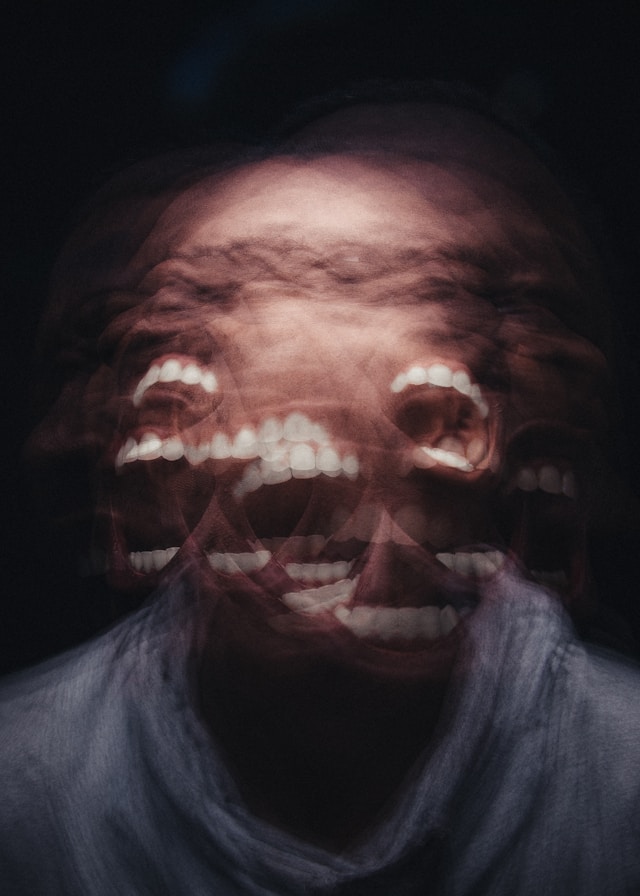
 In reality, we notice a multitude of little "selves" manifesting daily, right where our deepest wounds lie: our physical appearance, work, possessions, relationships, emotions...
When these little "selves" activate, we lose all discernment: we're gripped by anger, irritation, jealousy, envy, or fear. We're controlled by them.
The next instant, our thoughts resume their dance, and we forget we acted under their sway: images from breakfast this morning, that friend's words on the phone, the shopping list, yesterday's email, that bill we'll have to pay...
Carried away by the flow of our conditioned thoughts, we forget these little "selves" exist—until they flare up again.
In truth, we're alternately controlled by our little "selves" and our mind. There are hardly any moments of respite.
So, let's ask ourselves: When do we truly act with awareness?
The Illusion of a User Manual
 Of course, millions of us endure the same patterns and afflictions:
- The feeling of being lost, gripped by a dizzying loss of meaning
- The sense of missing our true calling
- Anxiety, the blues, even depression
- Weariness from being at the mercy of our emotions
- Despair over our dysfunctional relationships
And as if that weren't enough, we feel like we're going in circles: we suffer but never pinpoint what's afflicting us.
Thus, we search in a thousand directions for relief:
- Therapies: Countless practitioners (psychologists, psychoanalysts, hypnotherapists...) exist, and some endure long, expensive sessions.
- Personal development: Who hasn't read a self-help book seeking solutions? Or tried behavioral methods to break bad habits?
- Esotericism/spirituality: Oracles, invisible realms, astrologers, mediums offer reassuring signs and promised paths.
- Wellness: Yoga, sports, relaxation, meditation, nature reconnection—powerful tools to feel better.
- Energetics: Reiki, magnetism, positive affirmations, holistic approaches, even quantum healing prove useful, especially when the root cause eludes us.
- Medicine: How many are on antidepressants? Anxiolytics? Both at once?...
 All these techniques are appropriate, effective, and often essential to soothe the "self" and make it suited to worldly life.
However, they don't allow putting the "self" in the background of experience—let alone realizing awakening.
Worse, some practices can reinforce the "self's" existence, preventing any disidentification. In such cases, awakening becomes very difficult, if not impossible.
That's why it's crucial to avoid therapeutic tourism and spiritual wandering. If that's you, it's urgent to become aware of it.