Cours en ligne
THE PATH TO AWAKENING
| Ce document ne peut être vendu ou cédé à des tiers, ni reproduit sur quelque support que ce soit, même partiellement, sans autorisation écrite de l’auteur. En aucun cas la responsabilité de l’auteur ne saurait être engagée, la mise en œuvre de ce contenu restant sous l'entière responsabilité du lecteur. L'ensemble de ce contenu reste une pratique de bien-être et de prévention, n'ayant aucune vocation médicale. |
What is the 'Self'?
We have talked a lot about the "self"... But then, what is this "self"? Who are we really?
Identity is a complex notion that can be defined in a thousand ways, depending on each person's experience. Therefore, there is no single definition of the "self."
Yet, this "self" undeniably exists. We are convinced of it because we are strongly identified with it. Besides, without this "self," are we still someone?
Who Am I? My Definition
Since everyone has their own definition of the "self," I share mine. So, who am I?
A physical body (I move)
- This is the material part of my "self."
- Identifiable by a solid form that I can see, feel, and touch.
- This physical body needs food and air to exist (water, nourishment, breathing).
A mental body (I feel)
- This is the immaterial part of my "self."
- Identifiable by my thoughts, emotions, and sensations.
- This mental body needs impressions to exist (what I perceive through my five senses: hearing, sight, smell, taste, touch).
A personality (I am)
- This is the conscious part of my "self."
- Identifiable by my beliefs (concepts) and behaviors (actions).
- This personality (or individual consciousness) needs a "self" (ego) to exist (the certainty that I have an identity, that I am a unique individual, separate from others).
According to my definition, the "self" is therefore a process of identification that has solidified over time around three bodies. Like ivy entwining around a stone until it completely merges with it.
Conditioned Nature
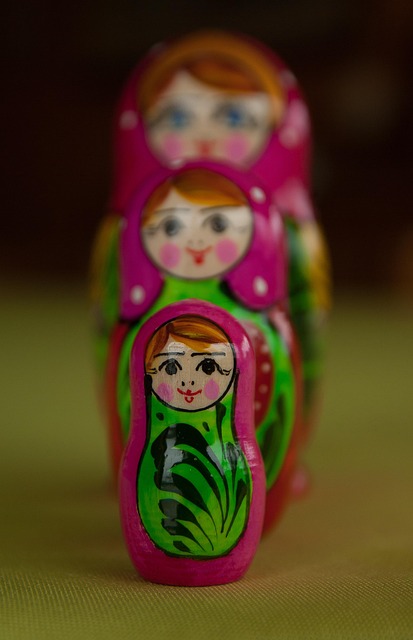 It is interesting to note that without any one of these three parts, the "self" simply does not exist.
Indeed, without a physical body, there is no mind to analyze thoughts and emotions. Yet, without the organization of thoughts and emotions, no personality can emerge. Without personality, no consciousness is possible. And of course, without consciousness, no "self."
These three parts are therefore interdependent: one does not exist without the other. Just as a garment cannot exist without the threads that compose it, the "self" is by nature conditioned.
For example: if I do not pay attention to my diet, my physical body will get sick. The illness will impact my mental state, and I will generate negative thoughts and emotions. These afflictions will eventually alter my personality and thus the "self."
We find here the law of cause and effect: nothing exists independently since everything is the consequence of something else. It is essential to understand that everything always converges toward this law.
Impermanent Nature
 Even the mountain where we were born will eventually disappear on a geological time scale. This is a physical certainty, once again linked to the law of cause and effect.
Indeed, the mountain is shaped by wind, water, tectonic movements, volcanoes, human activity, etc. Contrary to appearances, its nature is therefore unstable, changing, impermanent.
Of course, we are deceived by the persistent illusion: we see the mountain as stable and solid. We do not imagine for a moment that it could disappear. We firmly believe in this mirage.
And what about us? Let us ask the right questions: Are we the same person as ten years ago? Haven't our beliefs evolved? Haven't we changed our minds on this or that subject? What is truly stable in us? Are we like this mountain: a mirage doomed to vanish?
In reality, everything we identify with rests on shifting sands: our body inexorably deteriorates, our personality is changeable, our beliefs are as fragile as a candle flame, our emotions flow like a trickle of water between our fingers...
But what is not of a changing, impermanent nature? Can we name a single thing that escapes this rule? No. Even the Sun will eventually disappear. In reality, everything that exists has been in perpetual motion since the Big Bang.
We find here the foundations of Buddhism. However, there is no need to be fully aware that the "self" is impermanent and conditioned to realize that it is problematic.