
Cours en ligne
Back
THE PATH TO AWAKENING
States of existence
THE PATH TO AWAKENING
| Ce document ne peut être vendu ou cédé à des tiers, ni reproduit sur quelque support que ce soit, même partiellement, sans autorisation écrite de l’auteur. En aucun cas la responsabilité de l’auteur ne saurait être engagée, la mise en œuvre de ce contenu restant sous l'entière responsabilité du lecteur. L'ensemble de ce contenu reste une pratique de bien-être et de prévention, n'ayant aucune vocation médicale. |
States of existence
The Eight Realms According to Buddhism (Aṣṭa-gati )
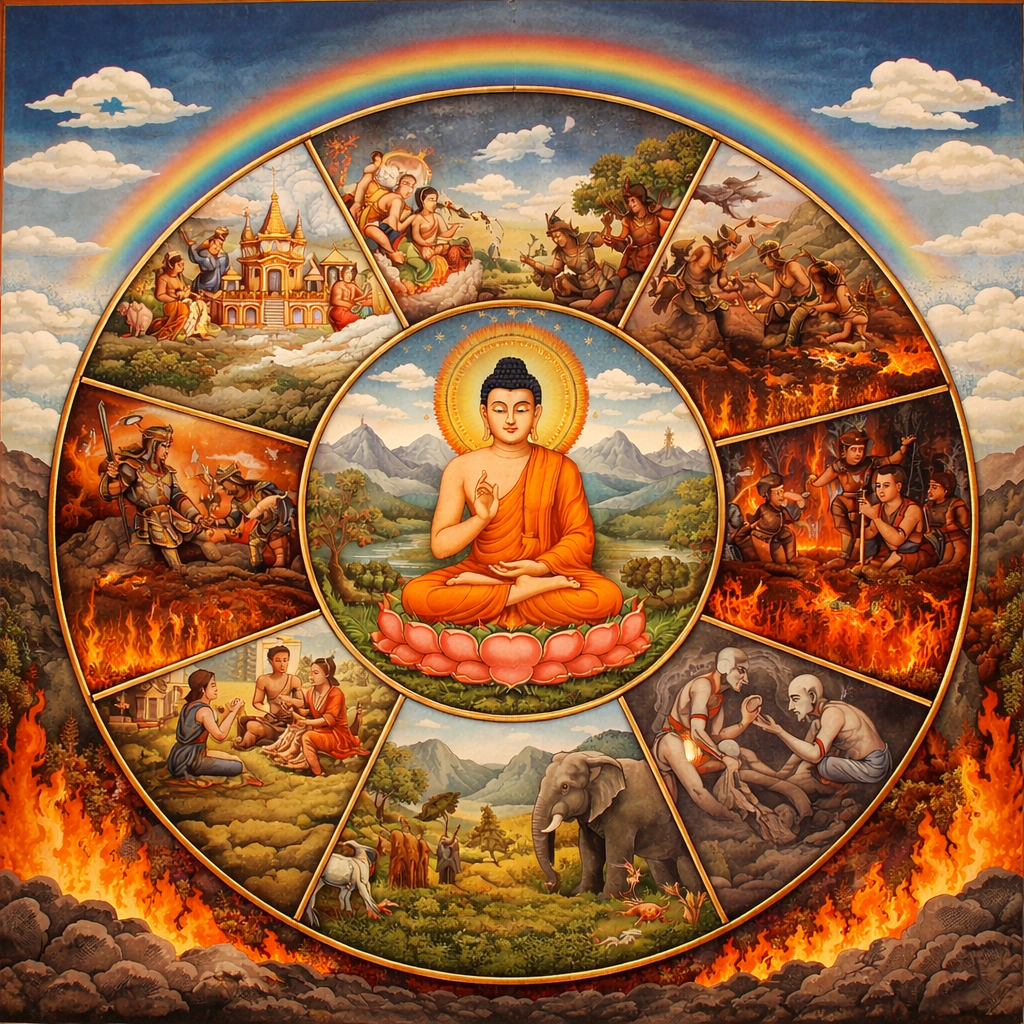 According to Buddhism, all beings are reborn into different states of existence according to their karma and level of consciousness, ranging from the most intense suffering to spiritual awakening.
These states of existence are traditionally divided into eight realms. Whether interpreted symbolically or literally, they offer a remarkable snapshot of the experiences that are possible for humans.
- Hell Realms (Naraka): A state of existence marked by anger and aversion. It corresponds to experiences of rage, hatred, despair, and extreme conditions—heat or cold—that offer no relief. Examples include mental illness, imprisonment, the absence of inner peace, violent trauma, self-consuming hatred, and persistent guilt.
- Hungry Ghosts (Preta): A state of existence characterized by attachment and habitual craving. It reflects an inability to understand the law of cause and effect, resulting in endless desires and chronic dissatisfaction. Examples include addictions and dependencies (alcohol, drugs, gambling, emotional attachment), inner emptiness, obsessions, and never-ending pursuits—money, success, happiness, meaning, fame, and so on.
- Animals (Tiryagyoni): A state of existence defined by fear and submission. It reflects a life dominated by instinct and the inability to question the established order. Examples include being ruled by impulses or fear, blind obedience to authority, and never questioning what is experienced or learned.
As long as we remain in these first three states of existence, awakening is impossible. In contrast, the next three states are considered conducive to spiritual progress.
- Humans (Manuṣya): A state of existence marked by discernment and the capacity to choose. Being born in a human body is ideal for pursuing awakening, as this state presents a balance of pleasure and pain that sharpens free will. Examples include the desire to escape repetitive patterns, awareness arising after illness, bereavement, or a breakup, and a challenging childhood that fosters awakening—such as growing up without access to worldly distractions or feeling forced to mature too quickly.
- Demi-Gods (Asuras): A state of existence characterized by power and wealth. Life in this realm often revolves around comparison with others and the struggle to maintain status. Examples include pride, jealousy, and engagement in the worlds of business, politics, media, or celebrity culture.
- Heavenly Gods (Deva): A state of existence defined by pleasure, beauty, and ease. This realm is generally not conducive to awakening, as the “self” experiences little affliction and therefore little suffering. Examples include wanting for nothing, living in indolence, spending life in comfort or meditation, and focusing only on personal well-being and beauty.
The next two states pertain to awakened beings.
- Solitary Buddhas (Pratyekabuddha): Beings who have attained awakening but do not seek to awaken others. At death, in the absence of compassionate activity, they exit the cycle of rebirth (Nirvana).
- Bodhisattvas: Awakened beings who spontaneously dedicate their existence to the benefit of others, even if it means postponing their own entry into Nirvana.

THE PATH TO AWAKENING
Awakening
Finding Inner Calm
stop Identifying With the Self
Attaining Clarity
Toward Compassion
Deepening the Practice